
CXHACKS
Shep Hyken interviews Vinod Muthukrishnan, Vice President &
General Manager of Webex Customer Experience at Cisco, on how AI
is shifting from a back-end tool into a collaborative coworker
inside customer service. The discussion focuses on a practical CX
question: how do you use automation to remove friction without
making support feel less human?
A useful takeaway is that AI works best when it handles repetitive
work, surfaces context, and helps agents focus on judgment,
empathy, and resolution quality. For teams building service
automation, agent assist, or digital self-service, this is a
grounded discussion on using AI to make experiences feel more
personal, not more robotic.
For CX leaders, architects, and builders, the broader lesson is
clear:
the goal is not AI-only service, but better collaboration
between AI efficiency and human insight.
Quick takes and market moments in customer experience, AI, and automation — the stories worth watching.
March 13, 2026: No Jitter takes a more skeptical view of Salesforce’s Agentforce Contact Center move, arguing that the launch reflects a deeper market shift as CRM vendors push toward owning the interaction layer. Read alongside the earlier CX Today piece, it offers a useful counterpoint: the strategic logic may be clear, but execution maturity, ecosystem risk, and enterprise fit are still open questions.
Read the full article
March 11, 2026: Zendesk said recent analyst recognition reflects continued momentum in its AI-first approach to customer service. The takeaway for CX teams is not just vendor positioning. It is that AI-led service platforms are now being judged on enterprise execution, operational outcomes, and readiness for agentic workflows, not just chatbot features.
Read the full article
March 10, 2026: CX Today frames Salesforce Agentforce Contact Center as more than a product launch. It signals a shift toward CRM-native, AI-first service platforms where voice, digital engagement, workflow, and automation sit inside the same system. For CX teams, that raises a bigger platform question: whether the contact center remains adjacent to the CRM or collapses into it.
Read the full articleMarch 9, 2026: Microsoft introduced Microsoft 365 E7, positioning it as a frontier suite for organizations leaning harder into AI, security, and high-end productivity workflows. For CX and service teams, the signal is broader than licensing: major vendors are increasingly bundling AI, automation, and governance into the core workplace stack rather than treating them as add-ons.
Read the full article
March 3, 2026: Salesforce and Formula 1 expanded their partnership with a new Agentforce-powered fan companion on F1.com designed to answer questions around the 2026 regulations and support a more personalized digital experience. It is a useful CX signal because it shows agentic AI moving beyond internal productivity into high-scale, always-on customer engagement.
Read the full article
July 10, 2025: Model Context Protocols (MCPs) are gaining traction for letting enterprises fine-tune LLMs on proprietary data — but with power comes risk. This CSO deep dive examines how MCPs can become attack surfaces, where subtle misconfigurations lead to data leaks, biased outcomes, or compliance failures. Security, auditability, and team oversight are becoming mission-critical.
Read the full article 9 min read
July 10, 2025: Internal reports reveal Microsoft has realized over $500 million in savings by automating internal support and call center operations with AI. The announcement comes just days after laying off 9,000 employees, raising tough questions about AI-driven efficiencies and their human cost. Microsoft's use of Copilot and custom AI agents to streamline service delivery reflects a growing enterprise trend toward cost-cutting through automation.
Read the full article 3 min read
July 10, 2025: Amazon Web Services is launching a dedicated AI Agent Marketplace that lets customers browse, deploy, and integrate autonomous agents for a variety of enterprise tasks. Anthropic will be the first launch partner, enabling Claude-based agents across operations, security, and customer workflows. The marketplace signals a shift toward plug-and-play agent ecosystems within cloud platforms.
Read the full article 3 min read
July 9, 2025: Hugging Face unveils an affordable open-source desktop robot designed for developers, educators, and hobbyists. Priced at $299, it runs local models and offers programmable behaviors, voice control, and camera-based interaction — built entirely on open frameworks. It’s a bold move to democratize physical AI agents beyond cloud software.
Read the full article 2 min read
July 4, 2025: CIO breaks down the real-world impact of agentive AI across industries — from healthcare and finance to logistics and manufacturing. The article explores how AI agents are moving from pilot to production, driving efficiency in support workflows, automating expert tasks, and enabling continuous adaptation in dynamic environments.
Read the full article 9 min read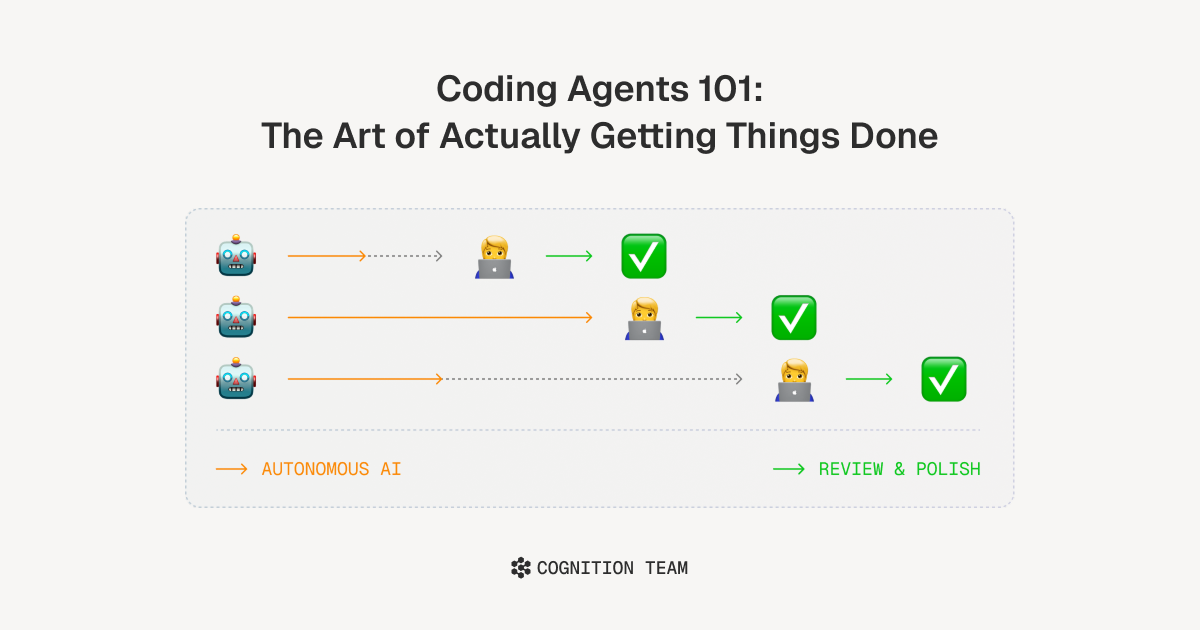
July 4, 2025: Devin AI launches a hands-on guide to practicing basic agent behavior using structured environments. The "Agents 101" playground helps developers train agents on task execution, state memory, retries, and interrupt handling — all through an interactive REPL and JSON tasks interface. A great resource for those exploring autonomy and reasoning in applied agents.
Read the full article 4 min read
July 2, 2025: Perplexity introduces a new “Enterprise Pro” plan priced at $200/month, targeting researchers, analysts, and AI-heavy workflows. The premium tier offers higher-quality answers, access to exclusive models, faster response times, and expanded API usage. This move signals Perplexity’s push beyond consumer search into enterprise and developer use cases.
Read the full article 2 min read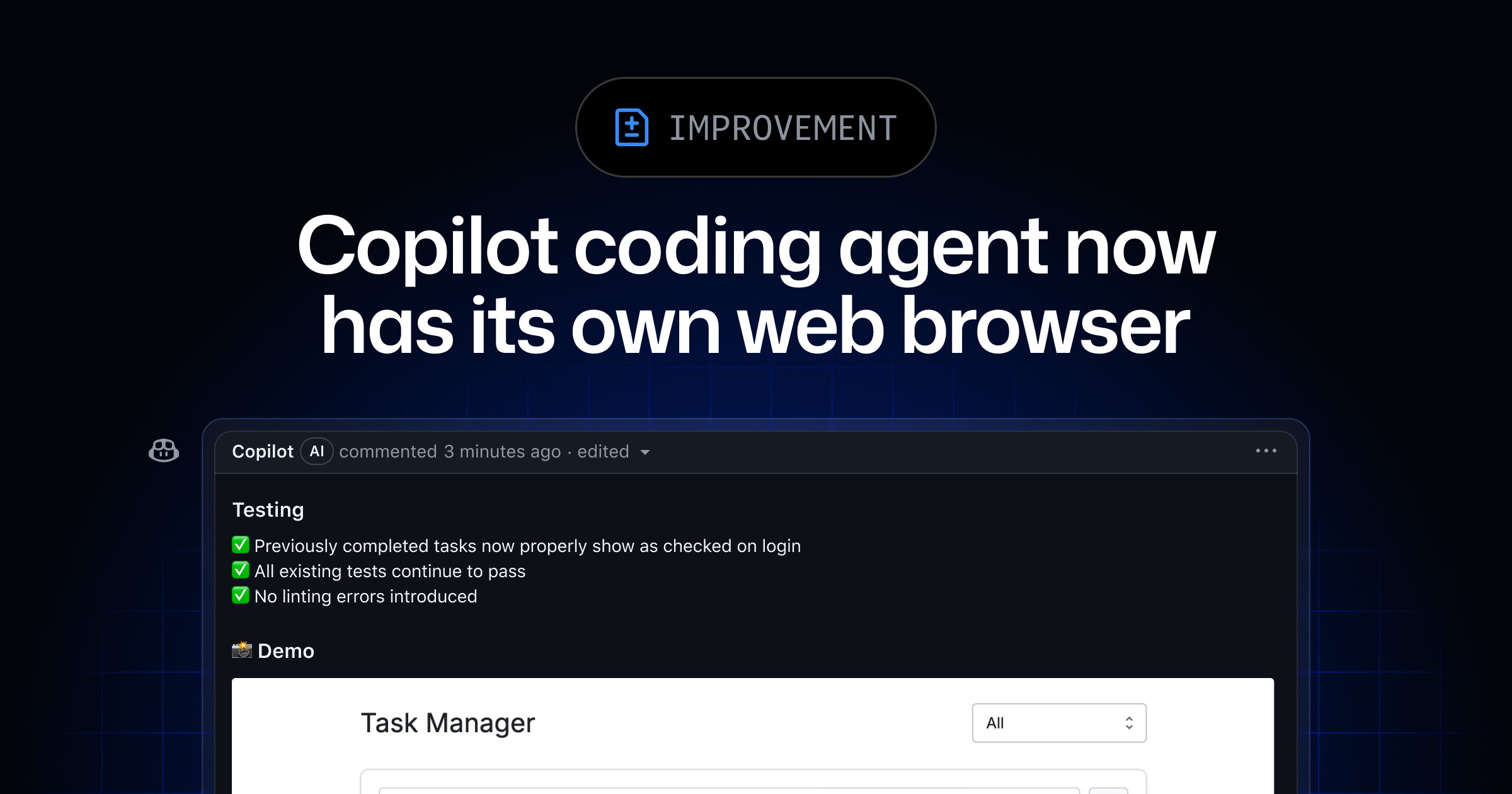
July 2, 2025: GitHub updates its Copilot Coding Agent with a built-in browser, giving it the ability to read documentation, check forums, and pull live data from the web. Developers can now issue natural language queries and let Copilot navigate external sources autonomously — a major step toward more capable, context-aware AI coding agents.
Read the full article 2 min read
July 1, 2025: Amazon has officially deployed over 1 million robots across its fulfillment network — a milestone that underscores its automation-first strategy. Alongside this, it released a new generative AI model purpose-built for warehouse operations, aimed at improving inventory planning, real-time route optimization, and autonomous coordination between human and robotic agents.
Read the full article 3 min read
July 2025: In collaboration with Bain & Company, NatWest has reimagined its customer experience by embedding AI across the full lifecycle — from chatbots and self-service flows to agent-assisted channels and proactive engagement. The transformation emphasizes human-centric design powered by automation and predictive insights, driving measurable gains in efficiency and satisfaction.
Read the full article 4 min read
June 26, 2025: Google announces Gemma 3n — a new small model optimized for developers and edge deployment. Designed to run efficiently on local laptops, mobile devices, or in the cloud, Gemma 3n supports precision tuning, structured output, and fast response generation. Paired with updated tooling and safety guides, it positions Gemma as a versatile open alternative to larger, resource-heavy LLMs.
Read the full article 3 min read
June 25, 2025: Genesys unveils Cloud AI Studio, a no-code environment for creating customer-facing AI agents with built-in controls for transparency, intent handoff, and fallback. The platform supports conversational design, orchestration, and enterprise-ready guardrails to align agentic behavior with real-world business goals — putting CX leaders in control of AI transformation.
Read the full article 3 min read
June 25, 2025: GitHub outlines its vision for Copilot’s future — moving beyond autocomplete into true agentic workflows. The post details how Copilot will evolve to manage full tasks like dependency upgrades, bug fixes, and code refactoring independently, acting as a peer programmer. It emphasizes trust, user oversight, and task decomposition as core to safe and scalable developer agents.
Read the full article 4 min read
June 25, 2025: Google introduces Gemini CLI — a command-line AI agent that brings Gemini 1.5 to developers’ local environments. It supports natural language task execution, terminal control, code generation, and even tool and API calling. Fully open source and extensible via Python, Gemini CLI marks a shift toward local-first agentic workflows, backed by Google's evolving Gemini model stack.
Read the full article 3 min readThis open-source framework adapts the classic 12-Factor App model to the world of AI agents. It offers a compact but powerful set of engineering principles covering evals, observability, context injection, error recovery, and more. A great mental model for anyone turning prototype agents into maintainable, reliable systems.
View the GitHub project Code + Checklist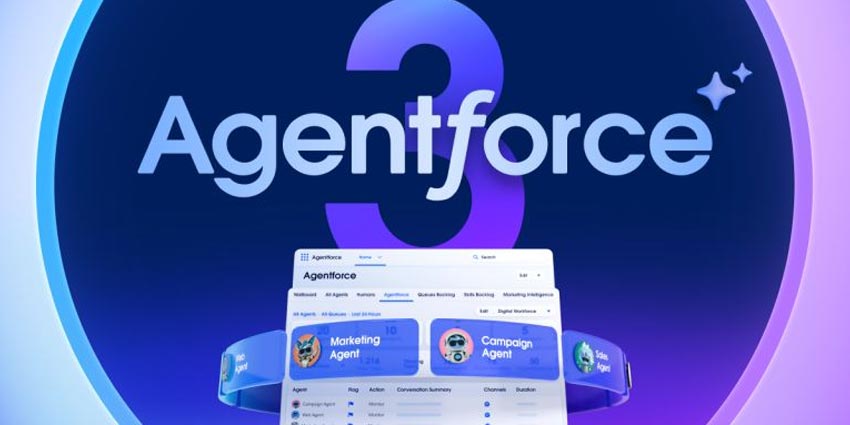
June 23, 2025: Salesforce announces Agentforce 3, its latest leap into AI-first CRM. The update introduces domain-specific agents that assist with account planning, pipeline forecasting, case resolution, and more. Designed for real productivity, Agentforce 3 brings agentic automation into day-to-day workflows, directly inside Sales and Service Cloud.
Read the full article 4 min read
June 20, 2025: Cloudflare revealed it mitigated the largest volumetric DDoS attack ever recorded — a 7.3 terabit-per-second deluge aimed at a single IP address. Peaking at 500 million requests per second, the attack exploited HTTP/2 Rapid Reset and involved a complex botnet structure. Cloudflare's detailed write-up breaks down attacker tactics, protocol abuse, and the architecture used to absorb and neutralize the traffic in real time.
Read the full article 5 min read
June 19, 2025: Asana disclosed a data leak involving its new AI-based Model Context Protocol (MCP) feature, which inadvertently exposed customer task metadata across organizations. The issue stemmed from an error in how org-level access controls were enforced during model interactions. While the exposure was limited, the incident underscores the risks of deploying early-stage AI integration features without rigorous access boundary testing.
Read the full article 3 min read
June 18, 2025: Google announces broader availability of Gemini 2.5 Pro and Flash, with improvements in performance, latency, and context handling. The new releases emphasize faster inference, better grounding in long conversations, and expanded dev access via Vertex AI and AI Studio. Google also teases future Gemini 3 models, signaling continued investment in multimodal reasoning and tool-use capabilities.
Read the full article 4 min read
This research paper introduces a conceptual framework treating prompting as computation — with inputs, intermediate steps, and outputs. It presents prompting as program-like behavior and explores how model reasoning scales with chain-of-thought, task structure, and tool use. A foundational read if you're serious about engineering smarter, modular LLM systems.
Read the full paper (PDF) Research PDF
June 12, 2025: Zoom introduced its latest AI Virtual Agent upgrade, now tightly integrated across its Contact Center platform. The company says the enhanced agent leverages large language models to deliver more natural customer conversations, better intent recognition, and intelligent handoffs to human agents. Zoom positions this as a key step toward fully AI-led customer journeys, improving resolution rates while increasing agent efficiency.
Read the full article 5 min read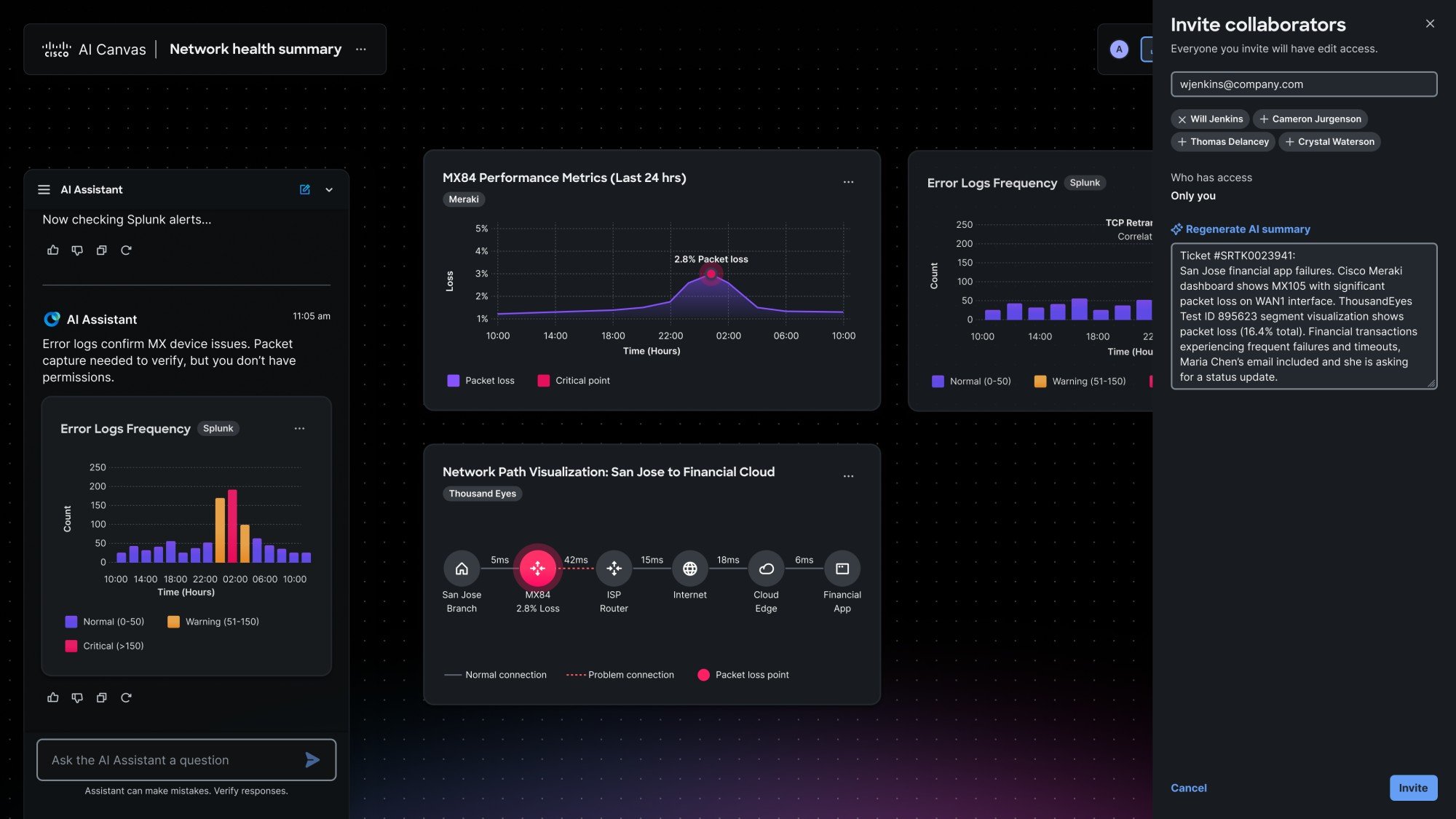
June 10, 2025: Cisco’s vision for the future of AI centers on human-agent collaboration at scale. In this strategic post, the company outlines how agentic systems will transform enterprise productivity, decision-making, and creativity. The piece emphasizes responsible AI, seamless human oversight, and practical deployments that go beyond chatbots — setting the stage for Cisco’s long-term AI architecture.
Read the full article 4 min read
June 10, 2025: Apple details updates to its foundation models powering on-device and server-based AI across iOS and macOS. The post covers architectural design, efficiency optimizations, and fine-tuning strategies for use cases like dictation, image generation, and smart replies. Apple emphasizes secure, low-latency experiences while maintaining tight privacy boundaries — a hallmark of its model deployment approach.
Read the full article 4 min read
May 29, 2025: Salesforce reports that over 8,000 customers are now using AgentForce, its new agentic AI platform embedded within Einstein AI. Salesforce AgentForce enables autonomous, cross-cloud actions like account updates and quote generation with minimal user input. Finance leaders are expected to benefit from automated forecasting, transaction matching, and risk analysis. The move positions Salesforce to compete more directly with the major players in the enterprise AI automation space.
Read the full article 4 min read
May 29, 2025: Cisco's Webex Contact Center has once again been named a Gartner® Customers' Choice in the Contact Center as a Service (CCaaS) category, highlighting strong customer satisfaction with deployment, ongoing support, and platform innovation. This marks the second consecutive year Webex has earned the distinction, reinforcing its position as a trusted, customer-favorite cloud contact center solution.
Read the full article 4 min read
May 28, 2025: Dario Amodei, CEO of Anthropic, warns that agentic AI could eliminate up to 50% of entry-level white-collar jobs within the next five years, driving U.S. unemployment to as high as 20%. He argues this shift will impact administrative, legal, and tech jobs, particularly for younger workers, and could lead to massive economic imbalance if left unmanaged. Amodei calls on companies and governments to stop sugar-coating the risks, citing growing use of AI for full task automation rather than augmentation. He also proposes public policy reforms, including an "AI tax" to fund redistribution, and stresses the urgency of proactive planning to avoid a destabilizing labor shock.
Read the full article 7 min read
May 28, 2025: Opera has unveiled an experimental AI browser that can autonomously generate websites and games using plain-language prompts. Built on the Chromium engine, the new browser includes a "Composer" AI capable of writing frontend and backend code, generating assets, and previewing live projects in-browser. The announcement marks a shift in how AI is embedded directly into the web development experience, moving beyond copilots to full agent-driven creation tools.
Read the full article 5 min read
May 27, 2025: Cisco's latest global report forecasts that agentic AI will handle 68% of contact center conversations by 2028 and automate 56% of interactions by 2026. Based on input from nearly 8,000 decision-makers across 30 countries, the report highlights a surge in AI adoption and rising expectations for proactive, personalized customer experiences. Cisco emphasizes the urgency of planning, warning that those unprepared may fall behind as the agentic era rapidly reshapes CX.
Read the full article 8 min read
May 24, 2025: The generative AI race is accelerating, with OpenAI, Anthropic, Google, and Apple competing to embed autonomous agents into consumer platforms. Apple is reportedly integrating ChatGPT into iOS, while Google is doubling down on Gemini inside Android and Workspace. Anthropic is expanding Claude's footprint, and OpenAI is developing agents to handle everyday digital tasks. These tech giants are laying the foundation for agent-first ecosystems that may redefine how we use devices and apps in the near future.
Read the full article 5 min read
May 22, 2025: Zoom's Q1 earnings highlighted major growth in its CX and AI portfolio, with Zoom Contact Center gaining enterprise momentum and Zoom AI Companion expanding automation use cases. The company now serves over 100,000 enterprise customers, many adopting AI-driven assistants, smart routing, and virtual agent integrations. CEO Eric Yuan noted these capabilities were key in winning large CX deals and fueling strategic growth beyond core meetings and UC.
Read the full article 4 min read
May 2025: NICE and ServiceNow have announced a strategic partnership they say goes beyond typical CCaaS-CRM integrations. According to both companies, the goal is to link NICE Enlighten's intent detection with ServiceNow's enterprise workflow engine — enabling AI-triggered service fulfillment across front- and back-office operations. They position this as a way to eliminate manual handoffs and accelerate resolution. The companies suggest this alignment will help businesses reduce cost-to-serve while redefining CX automation at scale.
Read the full article 5 min read
Sep 24, 2024: DoorDash is using Amazon Bedrock to power generative AI agents across its customer support operations. By leveraging foundational models from Anthropic and others, DoorDash built workflows that reduce response latency, handle high-volume intents, and enable agents to escalate or resolve issues faster. This Bedrock-backed stack helps automate and personalize customer service at scale.
Read the Case Study Read the Knowledge Base Article 10 min read